How to Set a Simple Table
A good table doesn't ask for much. A plate, something to eat with, a glass and a napkin will carry almost any meal; what lifts it is knowing where each piece sits and why. Here is a setting you can lay in a minute and lean on for years.
Start With the Plate
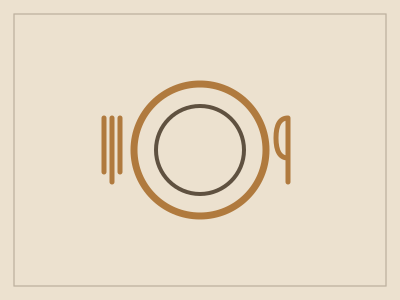
The dinner plate is the anchor of the whole setting, so put it down first, about a thumb's width in from the edge of the table. Give each person a comfortable span of room, roughly an arm's width between settings, so elbows never knock and no one feels penned in. If a starter or soup is coming, a smaller bowl or plate stacks neatly on top and gets cleared before the main arrives. Everything else you lay grows outward from this centre, so take a moment to line the plates up before anything else lands. A table that starts straight tends to stay calm all evening, and it costs you nothing but a few extra seconds. If you're using a runner or a cloth, lay it and smooth it flat before the plates go down, because a plate set over a wrinkle never quite looks right however you fuss around it afterward.
Forks Left, Knives and Spoons Right
The old rule holds because it simply works: forks to the left of the plate, knives and spoons to the right. Set the knife nearest the plate with its blade turned inward, a small courtesy that keeps the edge away from your neighbour, and place the spoon just beyond it. If you need more than one fork, put the first one you'll reach for on the outside and work in toward the plate as the courses come. Most weeknight dinners ask for nothing more than a single fork and knife, and there is real ease in that. Don't lay a piece of cutlery you won't use just to fill the space.
The Glass and the Napkin
The glass belongs above the knife, at the top right of the setting, where a raised hand meets it without ever crossing over the food. One water glass is plenty for an everyday meal; add a second only if you're pouring something alongside. The napkin can rest to the left of the forks or, for a little softness down the middle of the table, folded on the plate itself. Cloth feels generous and is worth keeping for the meals that matter, but a neatly folded paper napkin sits at the table without apology. Whatever you choose, give everyone the same, so no one place looks like an afterthought.
A Few Shared Extras
With the personal settings down, a handful of shared pieces finishes the table without crowding it:
- A jug or bottle of water within everyone's reach, so no one has to ask.
- Salt and pepper near the centre, shared between two or three people.
- A small plate or board for bread, passed around rather than portioned out.
- A serving spoon or fork beside any dish that needs one.
Keep these along the middle line of the table so each place stays clear. Anything a guest has to lift out of their own way is one thing too many. And don't fret if the shared pieces don't match; a plain side plate for the bread and a jam jar for a few stems look perfectly at home beside your best china. The table wants to feel used and generous rather than staged, so reach for what you already own and let the practical things earn their place.
One Touch That Makes It Yours
A simple table is a frame, and the nicest ones carry a quiet sign of the household. A short stack of napkins in a colour you love, a single lit candle, a low jar of whatever is growing outside the door: any one of these lifts a plain setting without asking much of you. The trick is restraint. One considered touch reads as care, while three at once tip into fuss. Choose the one that suits the evening and leave the rest for another night. The point is warmth, not display.
Lay It Even When You're Rushed
On the busiest evenings, set the table anyway. It takes less time than it seems and changes how the meal feels the moment everyone sits down.
A table laid with a little intention tells everyone at it that the evening was worth stopping for, even when supper is only beans on toast.
Put the plates down, drop a fork and knife at each, fill the glasses and fold the napkins, then call the household in. That is a proper table, and it will serve you far more often, and far more happily, than any elaborate one ever could.